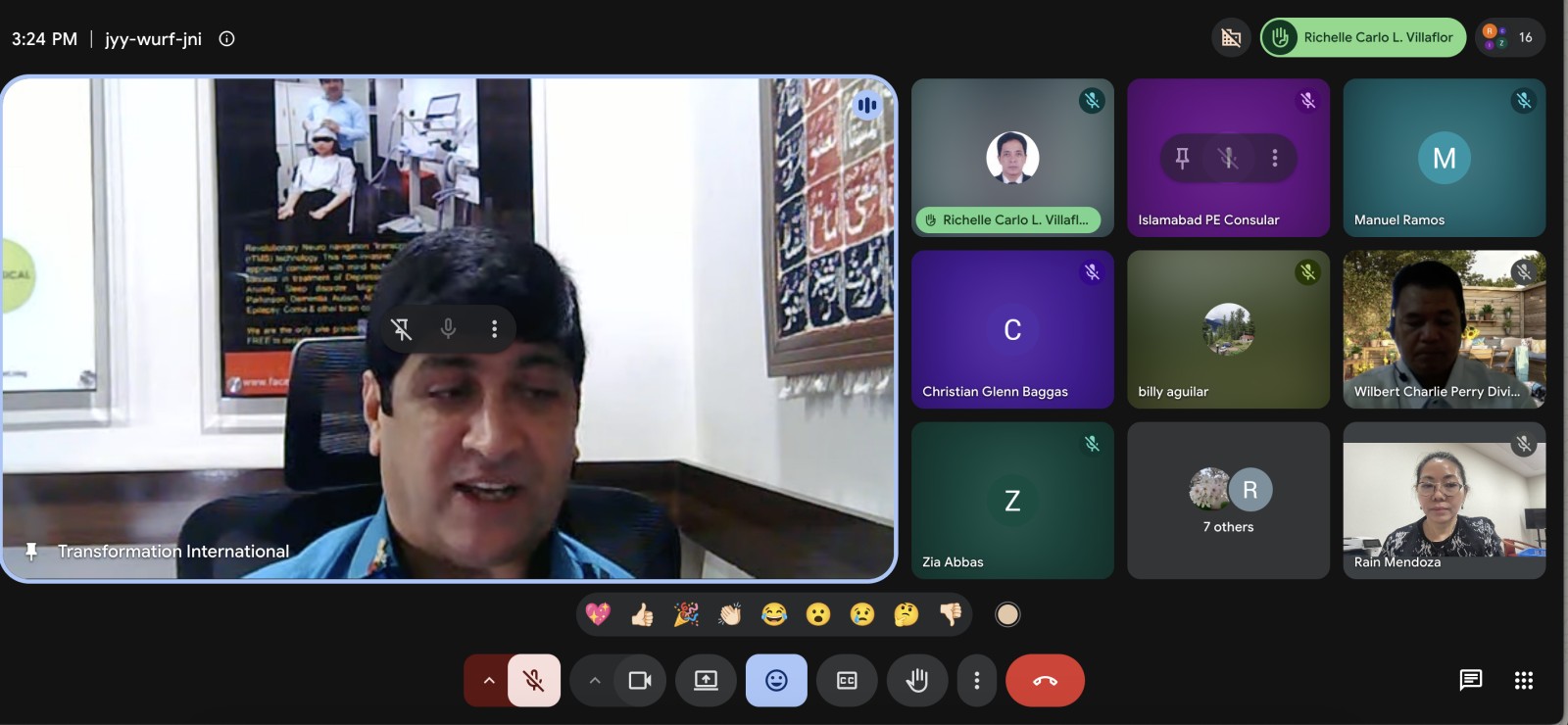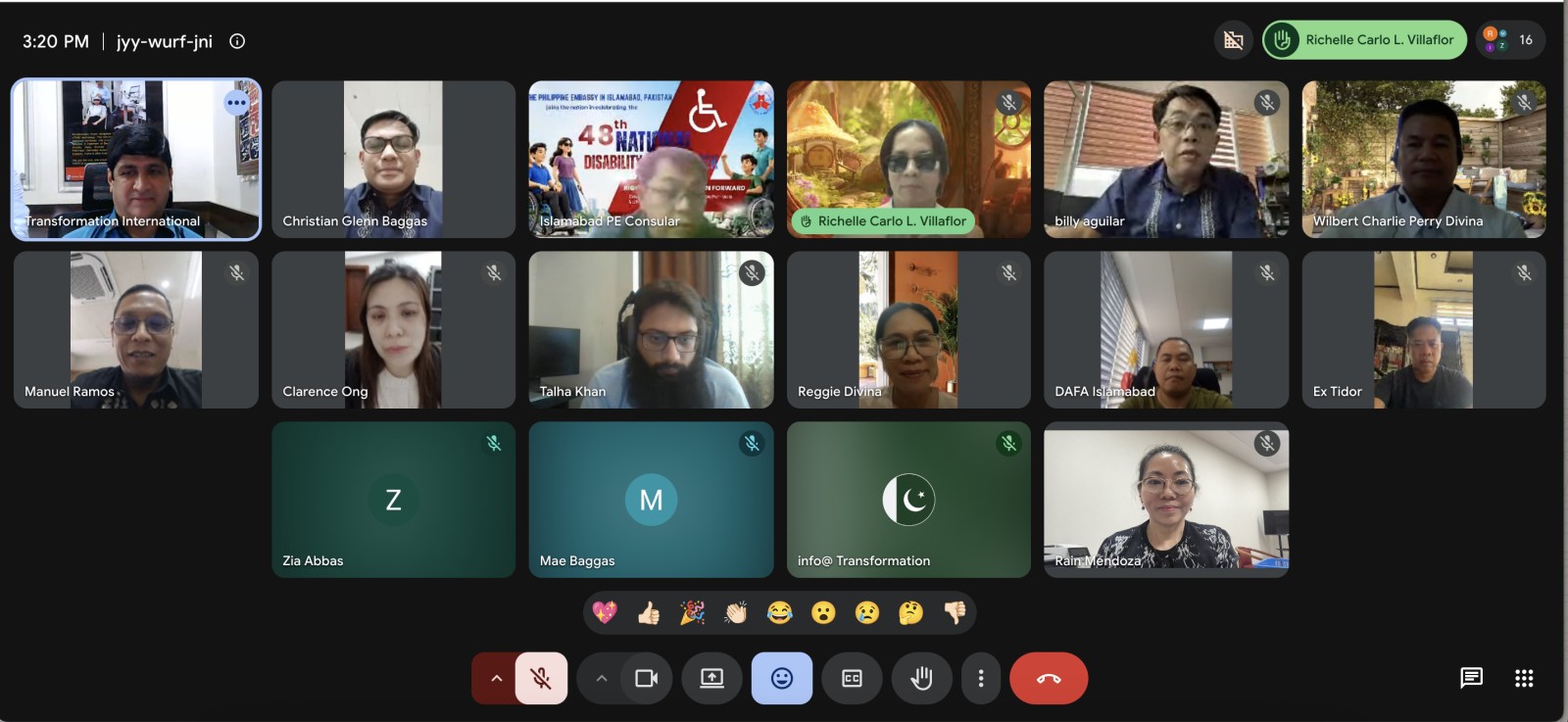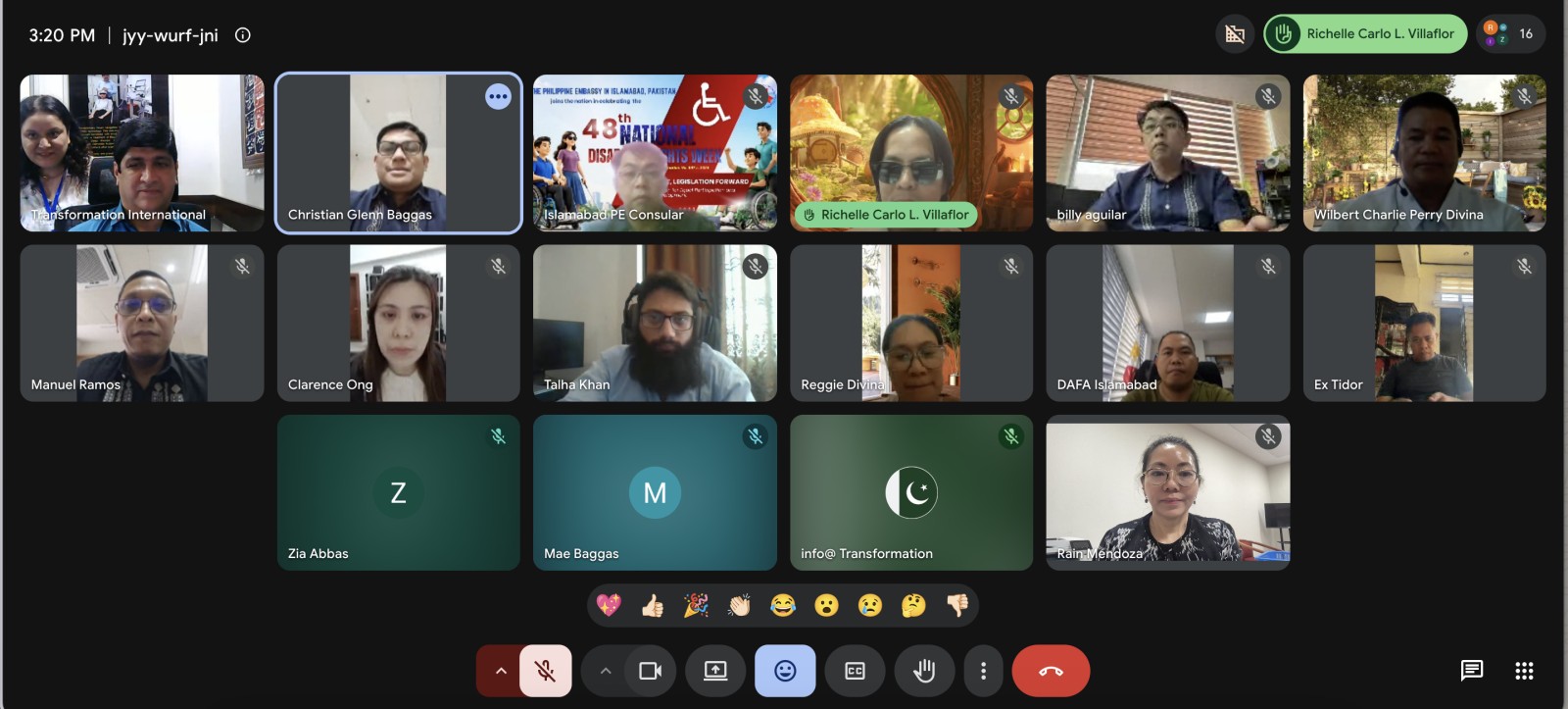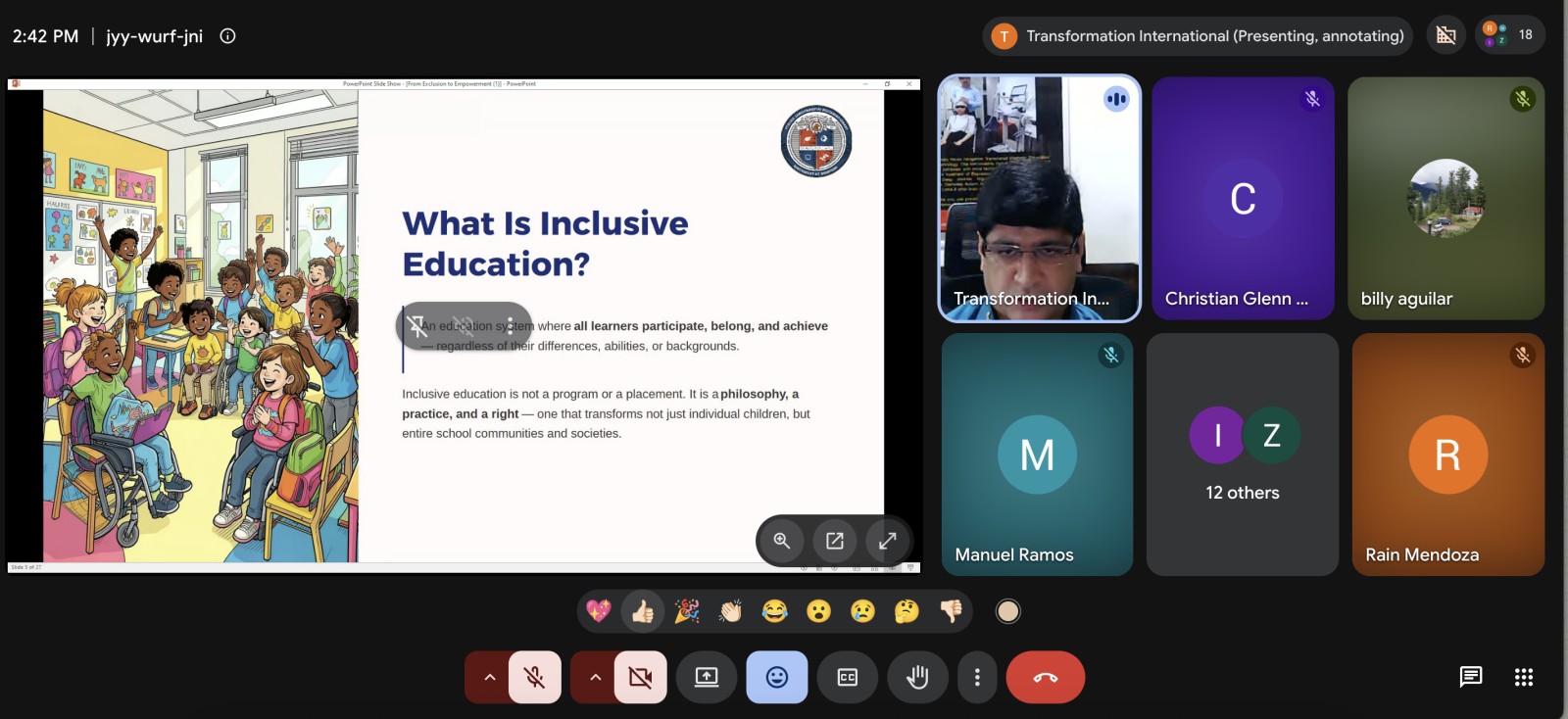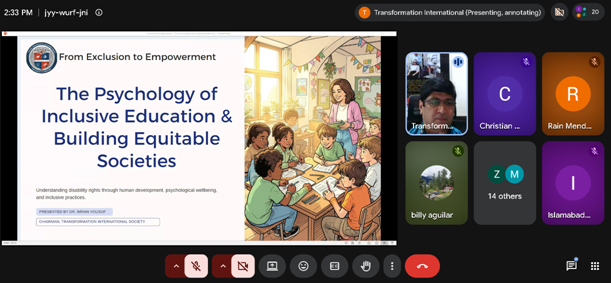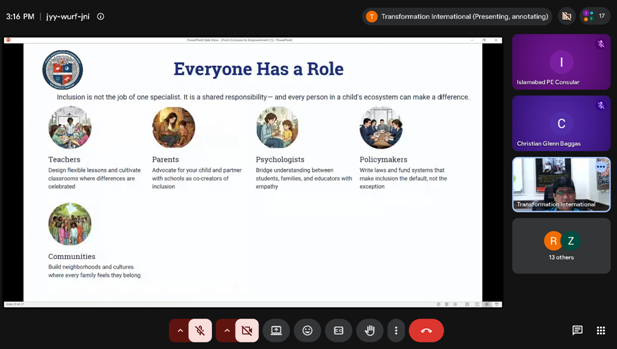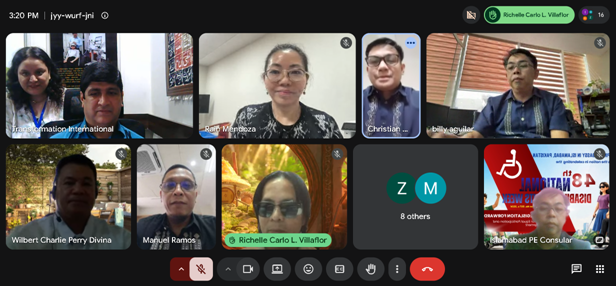

ISLAMABAD, 20 July 2026—In observance of the 48th National Disability Rights (NDR) Week, the Embassy of the Republic of the Philippines in Islamabad organized an online webinar entitled “The Psychology of Inclusive Education and Building Equitable Societies” on 20 July 2026, underscoring the Philippine Government’s commitment to promoting inclusion, equality, and respect for the rights and dignity of persons with disabilities.
The webinar was organized by Administrative Officer Mr. Christian Glenn B. Baggas in close coordination with the Honorary Consulate General of the Philippines in Karachi. The webinar featured Dr. Muhammad Imran Yousuf, Honorary Consul General of the Philippines in the aforementioned jurisdiction and an internationally recognized psychologist and advocate for inclusive education, as resource speaker. The activity was attended by Embassy personnel, including Locally-Engaged Foreign Service Staff (LEFSS), as well as representatives from the Office of the Police Attaché (OPA) and the Office of the Philippine Defense and Armed Forces Attaché (OPhilDAFA).
The activity formed part of the Embassy’s observance of National Disability Rights Week pursuant to Proclamation No. 597, in support of this year’s theme, “Rights First, Legislation Forward – Strategic Action for Equal Participation and Inclusive Development,” which emphasizes a rights-based approach to disability inclusion aligned with the United Nations Convention on the Rights of Persons with Disabilities (UNCRPD).
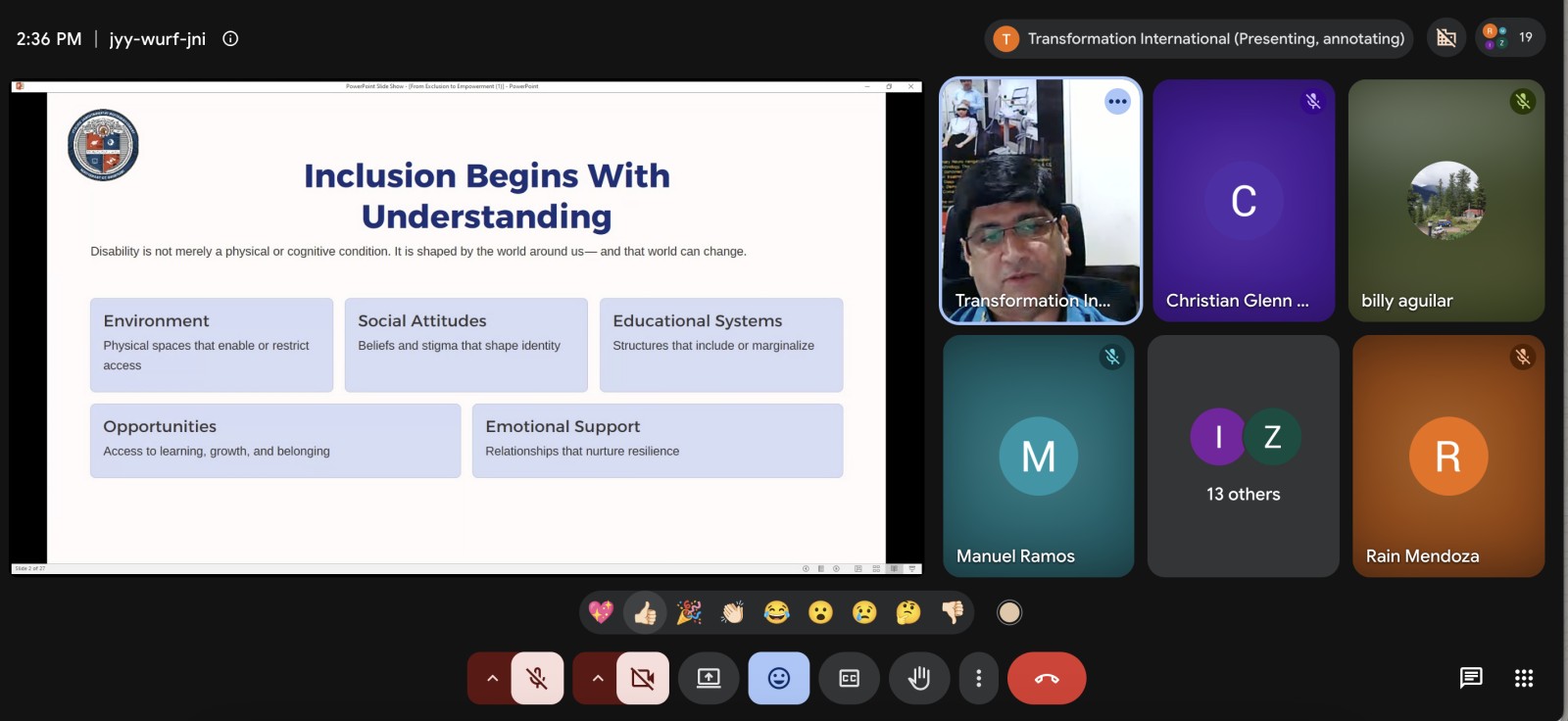
In his lecture, Dr. Yousuf emphasized that disability should not be viewed solely through the lens of impairment, but rather through the barriers created by society that prevent persons with disabilities from participating fully in education, employment, and community life. He underscored that inclusive education is not merely about placing children with disabilities in mainstream classrooms, but about creating learning environments where diversity is embraced, accommodations are provided, and every learner is given equal opportunities to succeed.
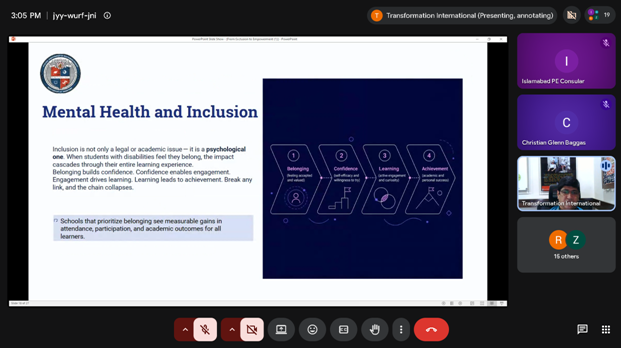
Drawing from his extensive professional experience, Dr. Yousuf discussed the importance of early intervention, family support, accessible educational systems, and greater public awareness in fostering inclusion. He likewise challenged common misconceptions surrounding disability and encouraged participants to adopt a strengths-based perspective that recognizes the unique abilities, talents, and potential of every individual.
During the interactive question-and-answer session, Dr. Yousuf highlighted the need for governments and institutions to invest in disability-inclusive infrastructure and accessible public spaces. He observed that meaningful inclusion begins with removing physical, institutional, and attitudinal barriers, noting that accessibility should become an integral requirement in public infrastructure and urban planning rather than an afterthought.
In her closing remarks, Third Secretary and Vice Consul Rain R. Mendoza thanked Dr. Yousuf for his valuable insights and encouraged participants to carry forward the lessons learned from the webinar. She emphasized that inclusion extends beyond providing access, requiring society to recognize the inherent dignity, diverse abilities, and potential of every individual. She likewise encouraged personnel to promote greater awareness, challenge misconceptions surrounding disability, and foster inclusive environments in their workplaces, schools, communities, and daily interactions so that no one is left behind.
The webinar also reinforced the Department of Foreign Affairs’ Gender and Development (GAD) agenda by promoting equity, non-discrimination, and the meaningful participation of marginalized sectors in all aspects of society. By fostering greater awareness of disability inclusion and accessibility, the activity highlighted the intersection of disability rights, gender equality, and human rights as essential pillars of inclusive and sustainable development.
Through initiatives such as this webinar, the Philippine Embassy in Islamabad reaffirms its commitment to advancing a culture of inclusion, respect for human dignity, and equal opportunity, while supporting national and international efforts to build more accessible, equitable, and compassionate societies for all. END