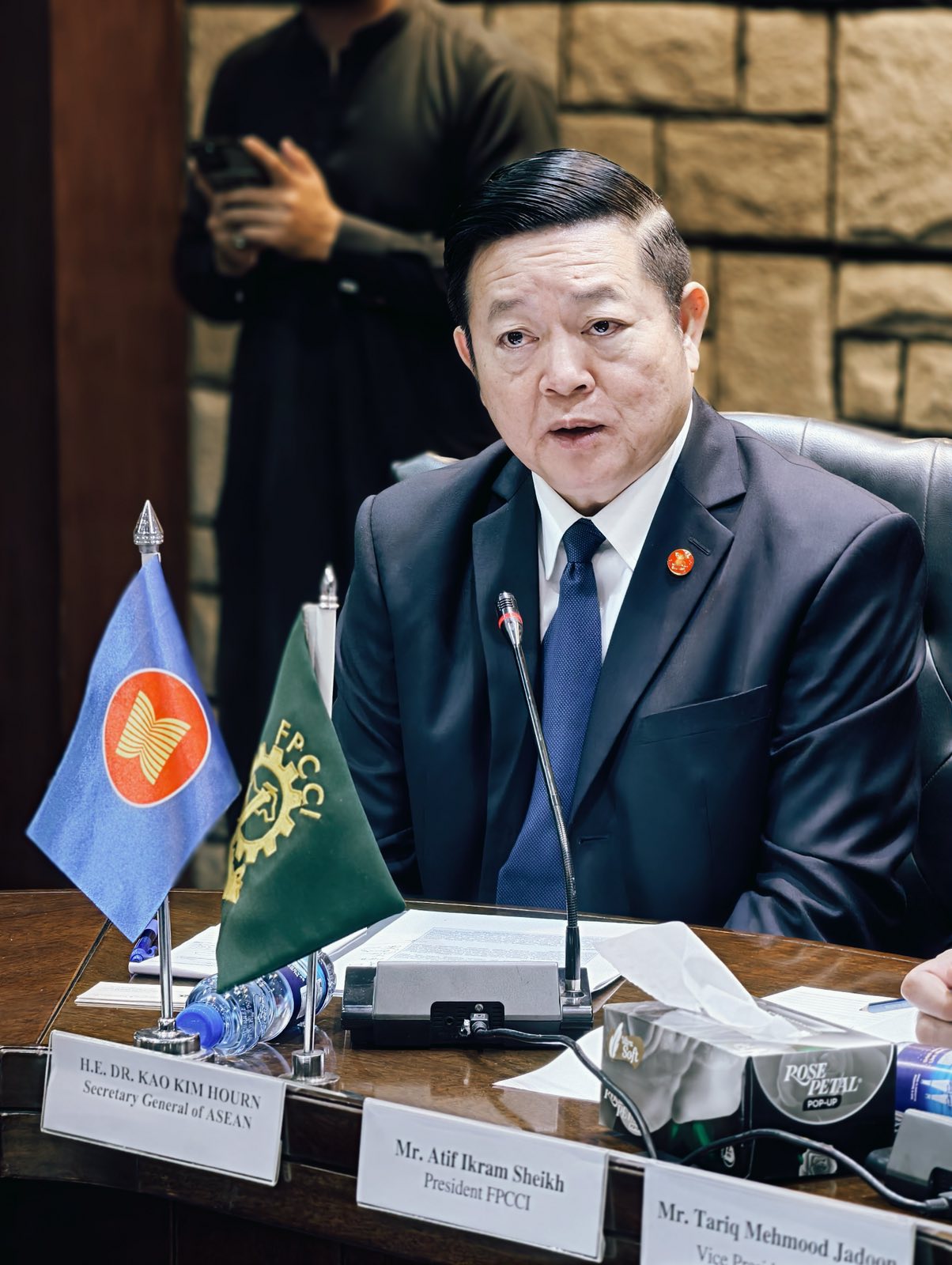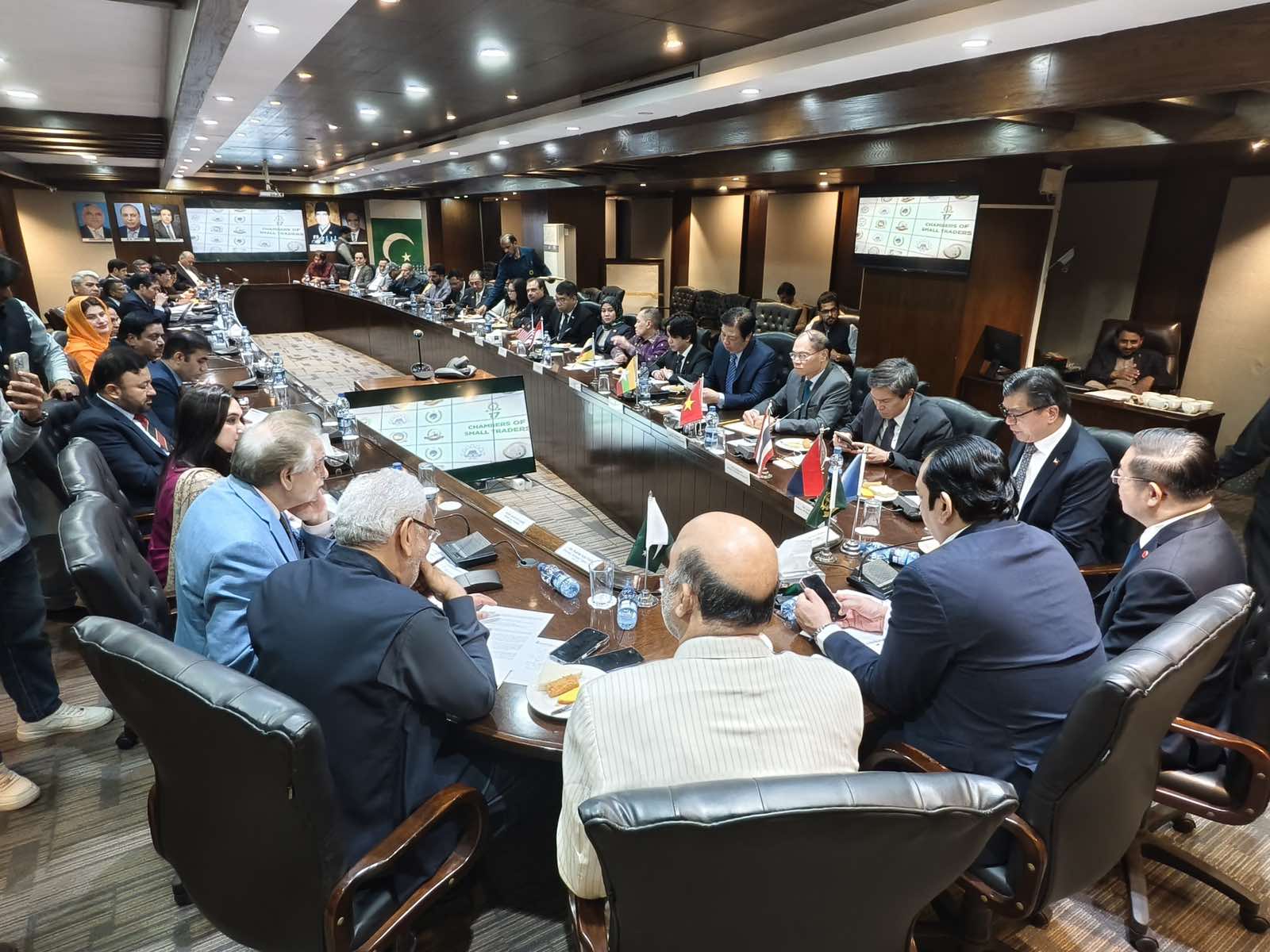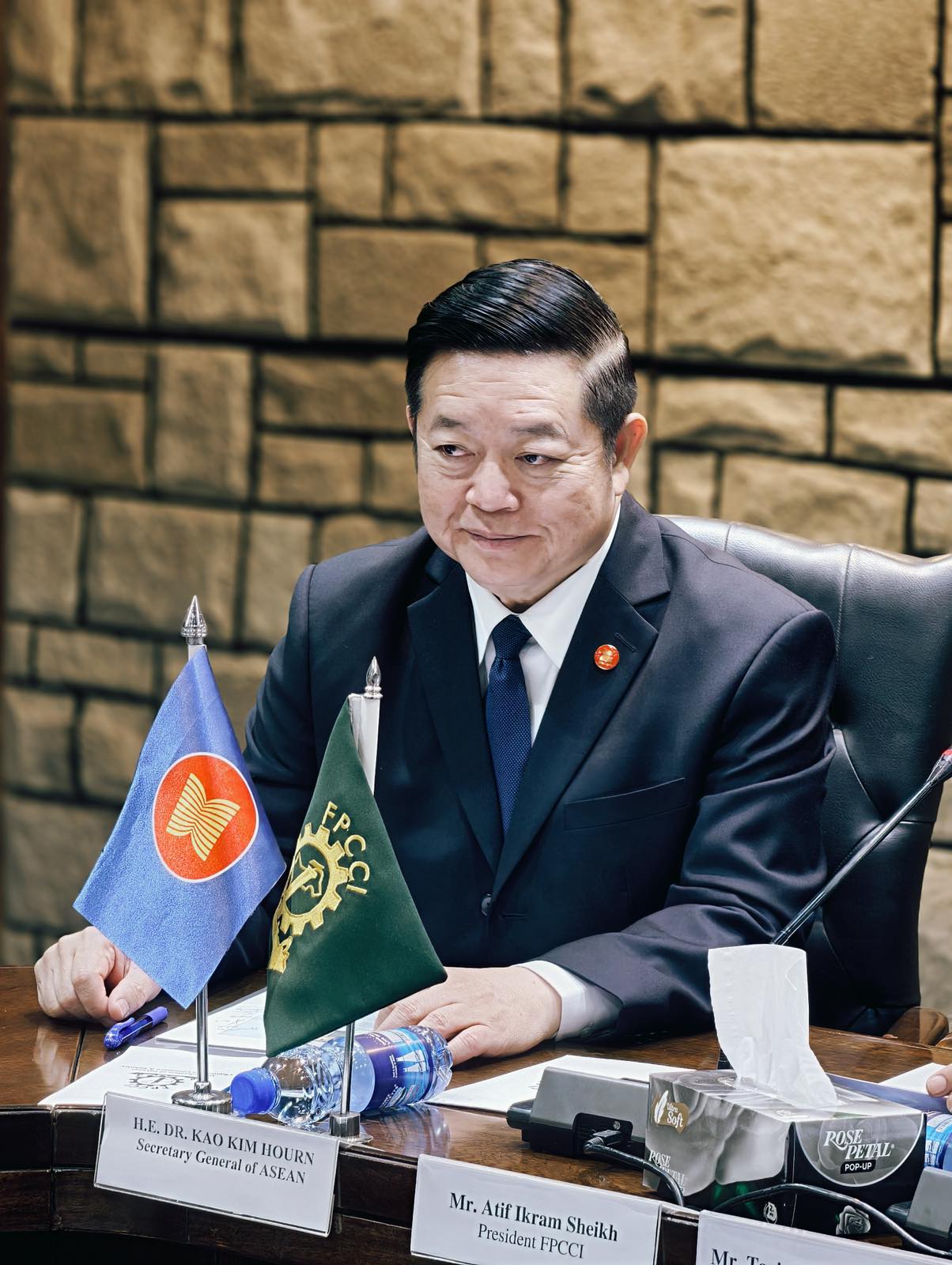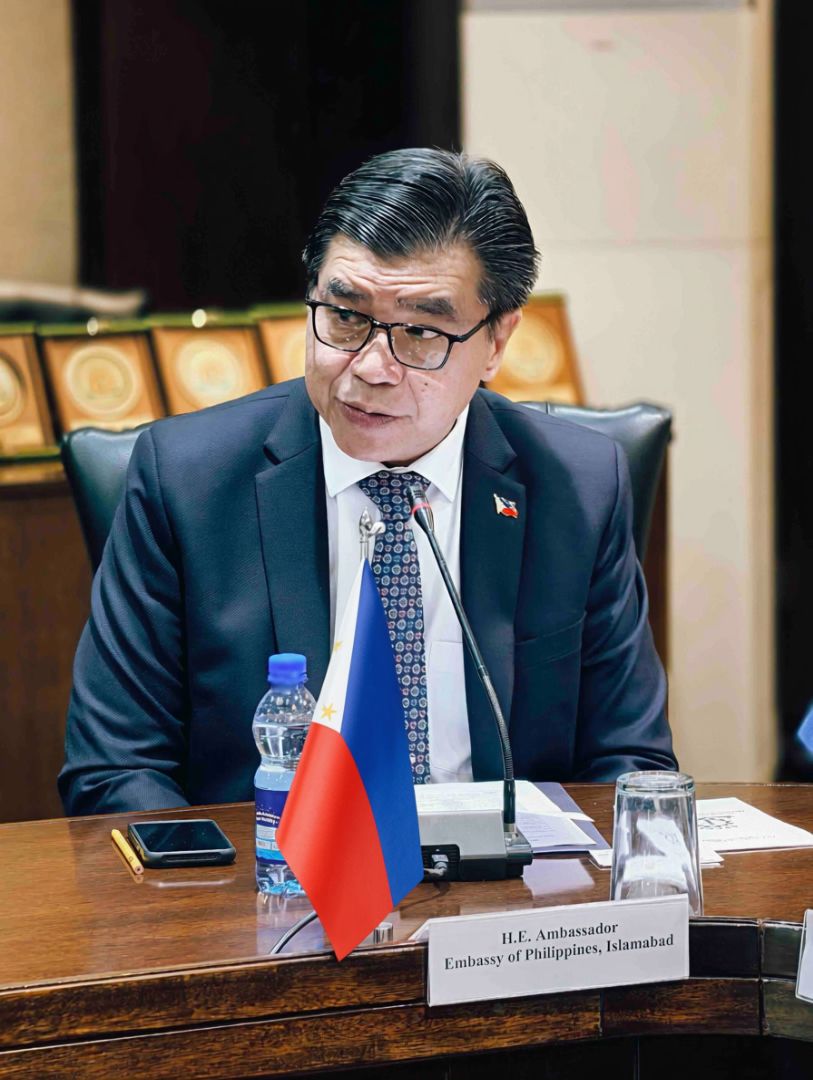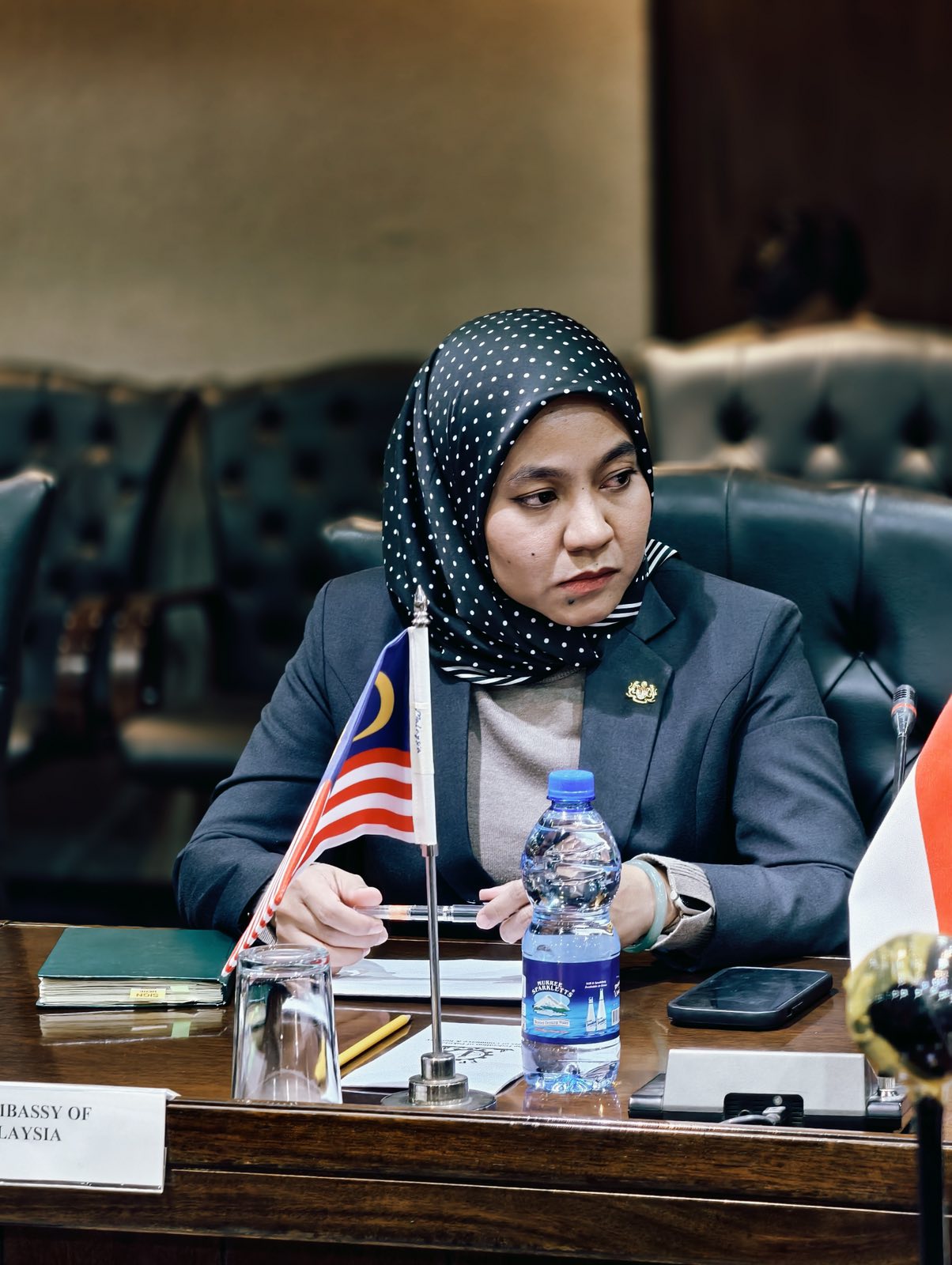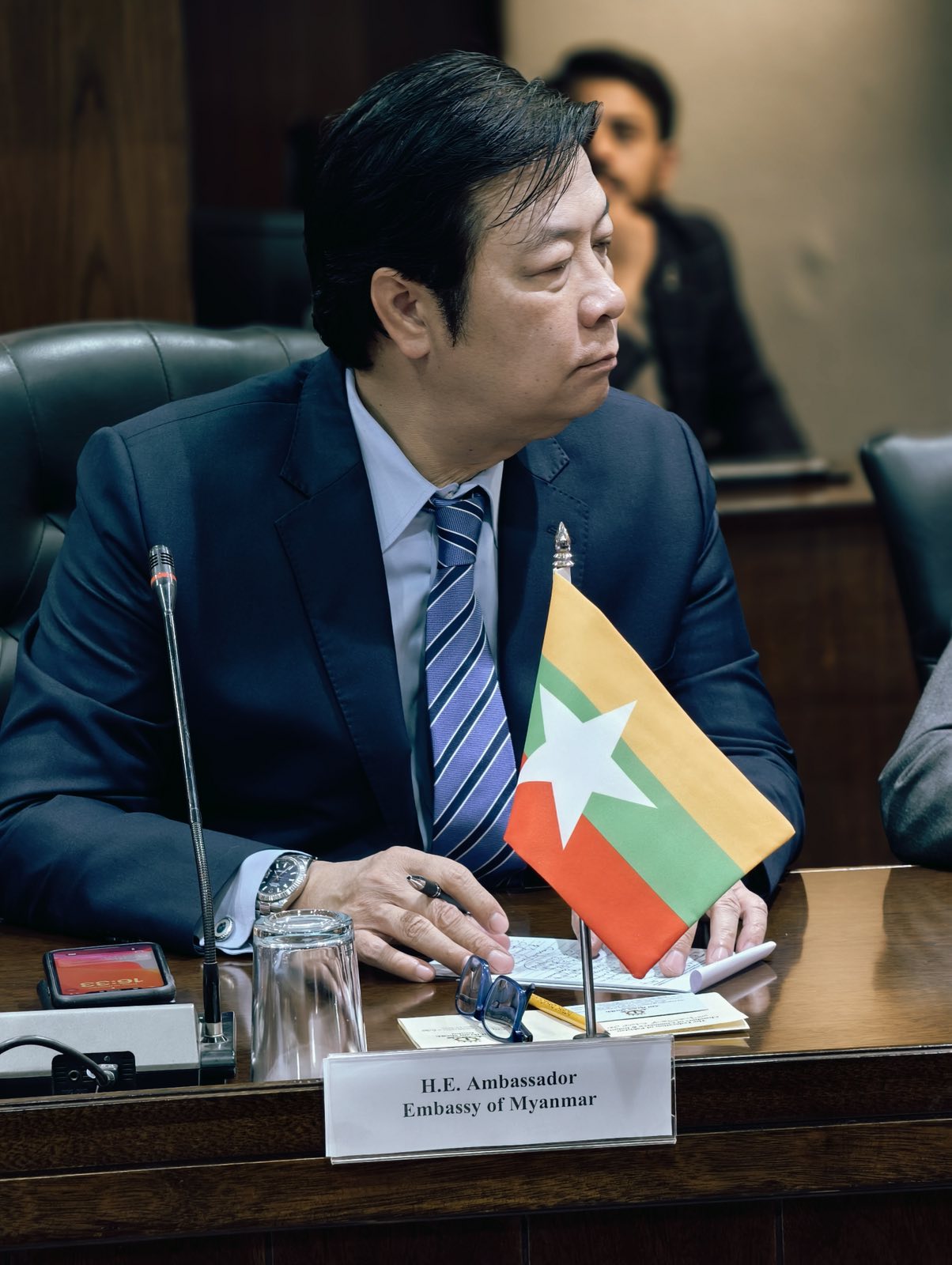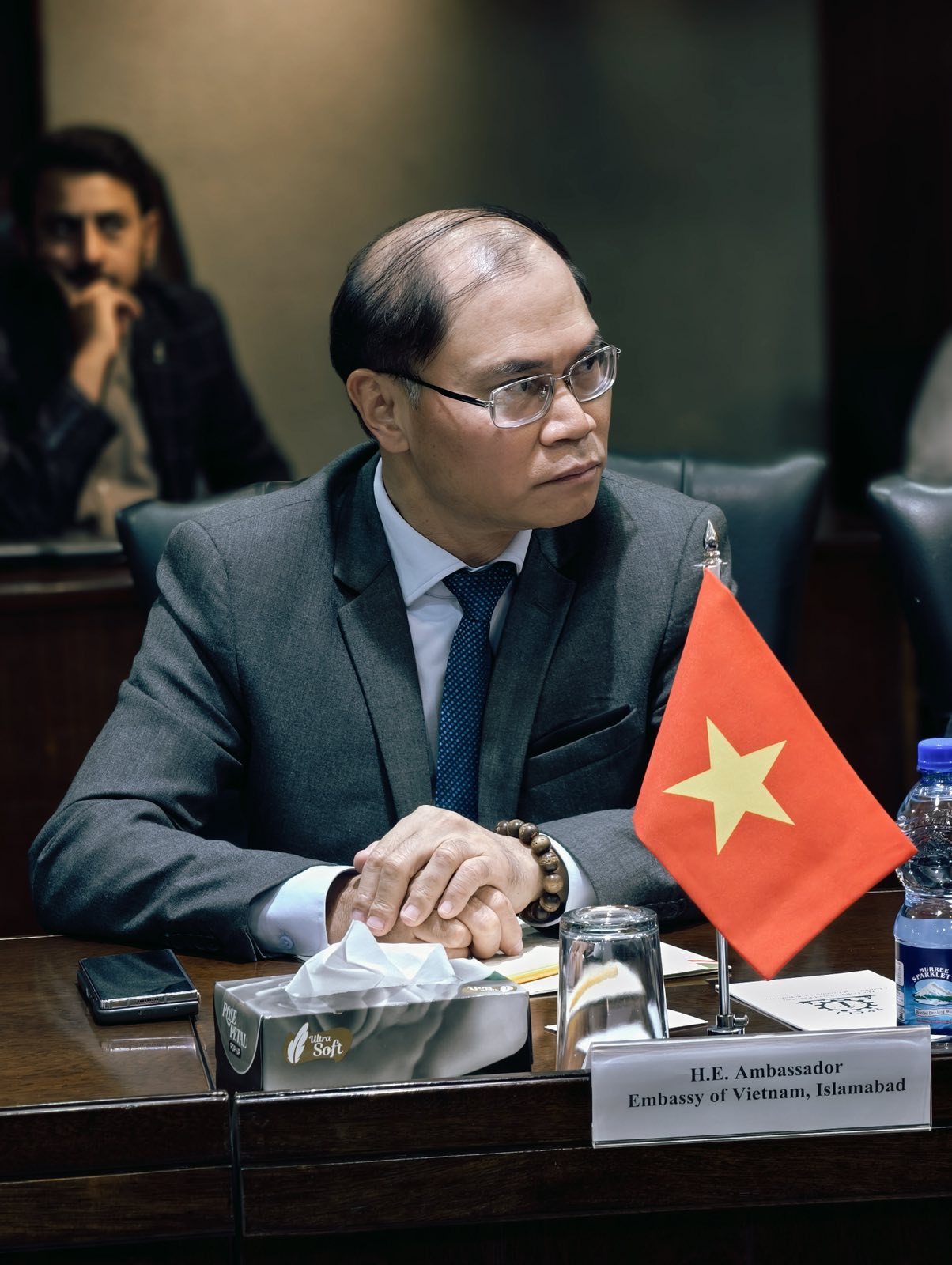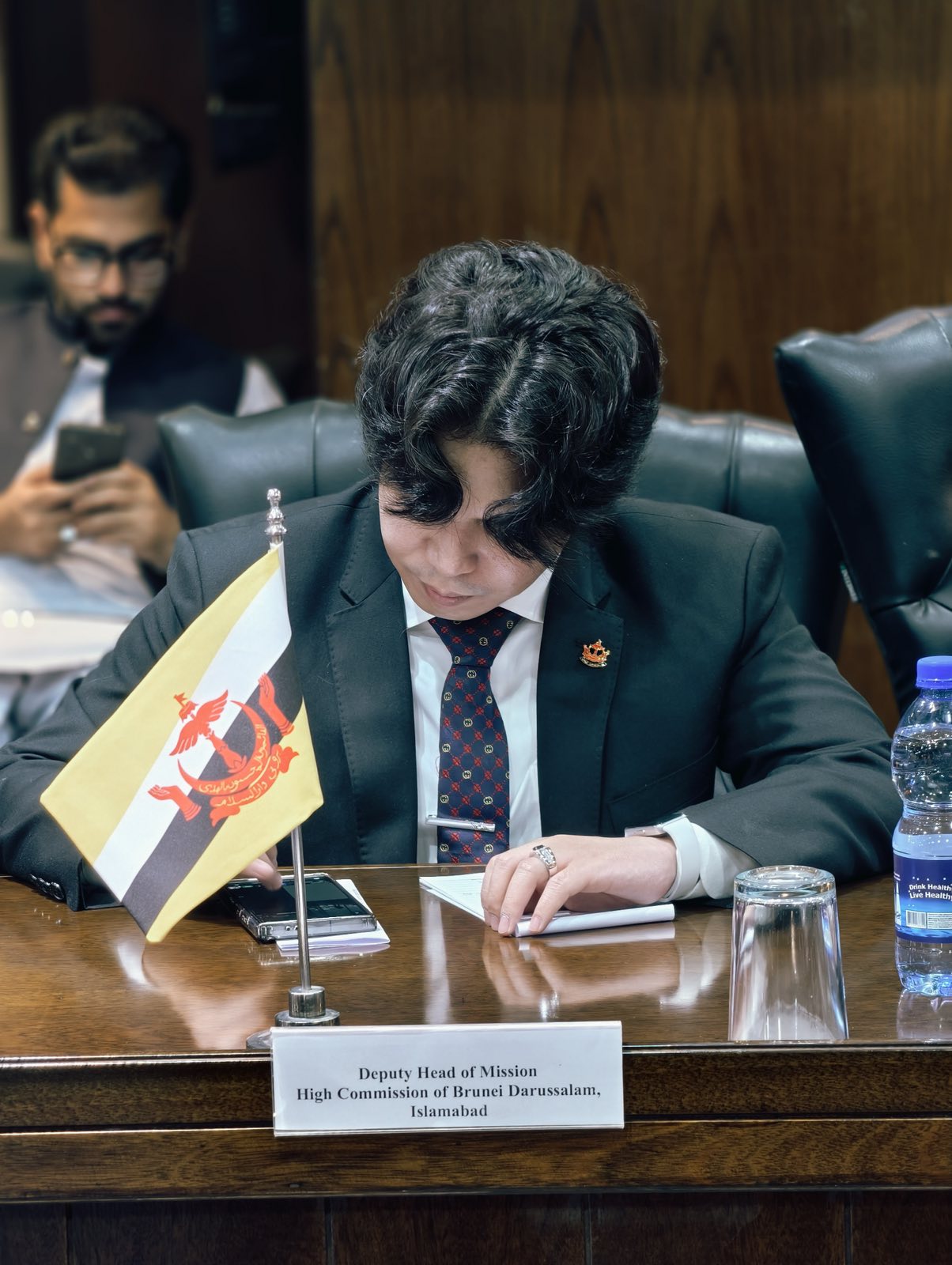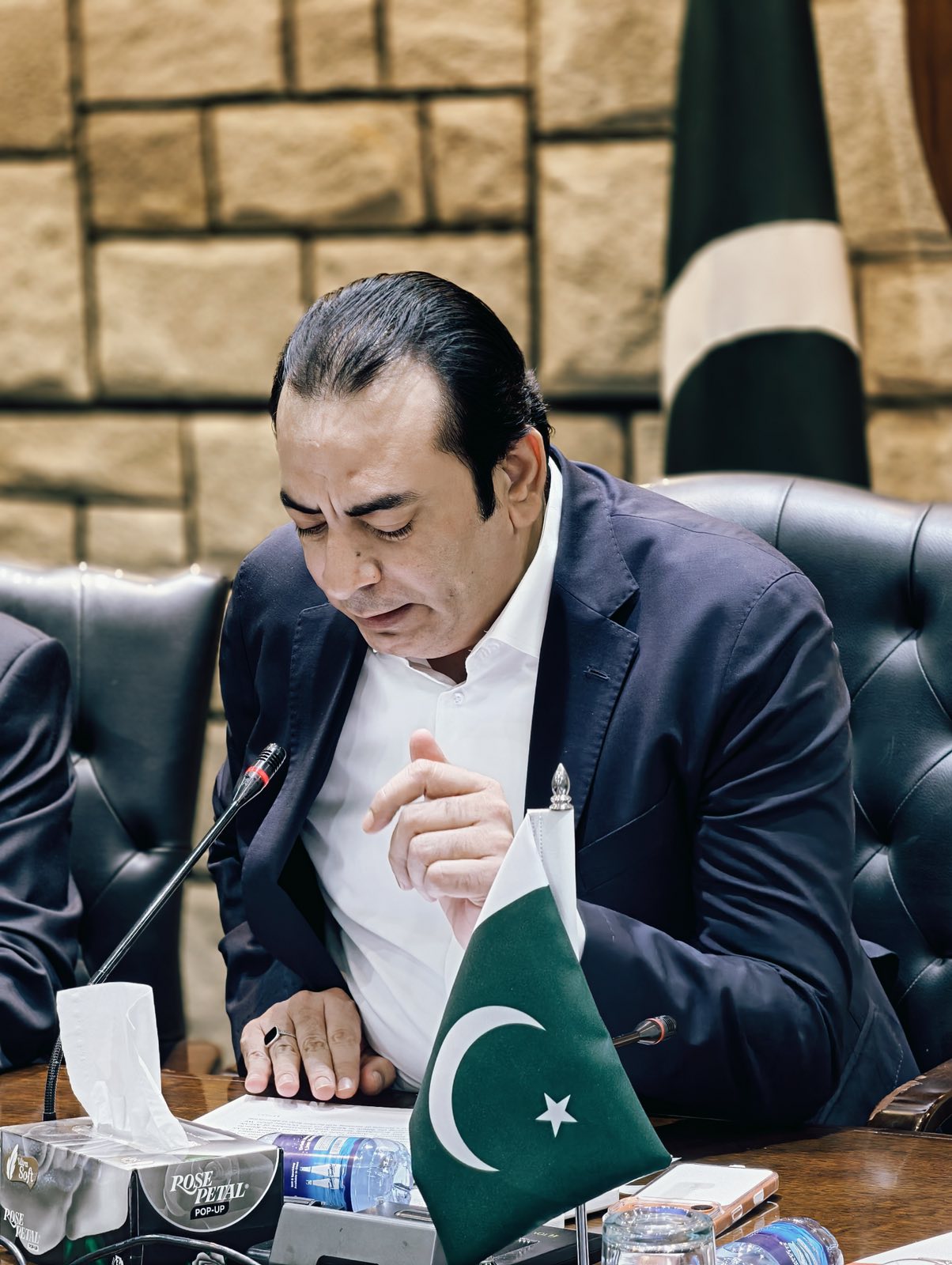

ISLAMABAD, 20 November 2026—Philippine Ambassador to Pakistan, H.E. Dr. Emmanuel R. Fernandez, in his capacity as Chair of the ASEAN Committee in Islamabad (ACI), joined ASEAN Secretary-General H.E. Dr. Kao Kim Hourn, fellow ASEAN diplomatic representatives, and leaders of Pakistan’s business community at the Pakistan–ASEAN Business Roundtable hosted by the Federation of Pakistan Chambers of Commerce and Industry (FPCCI) at its Capital Office in Islamabad on 20 November 2026.
Held under the theme “Navigating Our Future, Together,” the Roundtable formed part of the Secretary-General’s working visit to Pakistan and provided a platform for ASEAN diplomatic representatives and Pakistani business leaders to explore opportunities for expanding trade, investment, and private-sector cooperation.
The gathering featured addresses by FPCCI President Mr. Atif Ikram Sheikh and ASEAN Secretary-General Dr. Kao Kim Hourn, as well as a presentation by Mr. Karim Aziz Malik, Chairman/In-Charge of the FPCCI Capital Office, on Pakistan’s trade with ASEAN countries. The program also included an open discussion on strengthening economic and commercial ties between Pakistan and ASEAN Member States.
Delivering remarks as ACI Chair, Ambassador Fernandez emphasized the importance of translating longstanding diplomatic and institutional relationships into practical commercial cooperation. He noted that Pakistan has been an ASEAN Sectoral Dialogue Partner since 1993, with two-way trade reaching approximately US$10.74 billion in 2025, according to ASEAN statistics.
The Ambassador stressed that while governments establish the frameworks for cooperation, businesses give these relationships substance through trade, investment, services, technology, and commercial partnerships. He encouraged FPCCI and ASEAN diplomatic missions to facilitate more targeted business connections, particularly by identifying potential buyers, distributors, and investment partners and helping enterprises understand market requirements.
Ambassador Fernandez also recalled the ACI’s engagement with FPCCI and business leaders in Karachi in October 2026, which reflected continuing interest in strengthening ASEAN–Pakistan economic ties. He identified agribusiness and food processing, the halal industry, textiles, pharmaceuticals, digital services, tourism, and logistics among the sectors offering opportunities for closer cooperation.
Ambassador Fernandez also highlighted the longstanding friendship between the Philippines and Pakistan, whose diplomatic relations date back to 1949. He noted that bilateral merchandise trade amounted to approximately US$193 million in 2025, underscoring the considerable potential for further expansion between the two economies.
The Ambassador cited the convening of the Second Philippines–Pakistan Joint Economic Commission in Manila in February 2026, following an eight-year interval, as an important development in bilateral economic relations. The meeting covered cooperation in trade and investment, agriculture, pharmaceuticals, halal industries, energy, and other areas. Both sides also welcomed exploring a possible preferential trade agreement, subject to the necessary feasibility studies, and supported efforts to revitalize the bilateral Joint Business Council.
Ambassador Fernandez identified three particularly promising areas for Philippine–Pakistan commercial cooperation: *agriculture and food products; pharmaceuticals and the halal industry; and technology and services.* He noted that Pakistan’s strengths in agricultural production, manufacturing, and its growing technology workforce could complement the Philippines’ consumer market, healthcare requirements, developing halal ecosystem, and established information technology and business process management industry.
He likewise highlighted opportunities in tourism, education, and professional exchanges, emphasizing that the two economies should be viewed as complementary rather than competitive.
The Ambassador encouraged FPCCI and its members to adopt a practical, business-driven approach by identifying specific products, services, and projects with genuine commercial potential, establishing connections with Philippine counterparts, and jointly examining regulatory requirements and obstacles to market entry.
He reaffirmed the Philippine Embassy’s readiness to facilitate business contacts, provide relevant market information, and direct interested enterprises to appropriate Philippine institutions and business organizations.
Ambassador Fernandez concluded by underscoring that the success of economic diplomacy should be measured not merely by the number of meetings conducted, but by the partnerships and commercial opportunities that emerge from them.
The Roundtable reflected continuing efforts by the ACI, under the Philippine Chairship, to strengthen engagement with Pakistan’s private sector and encourage more concrete economic cooperation between ASEAN Member States and Pakistan. END