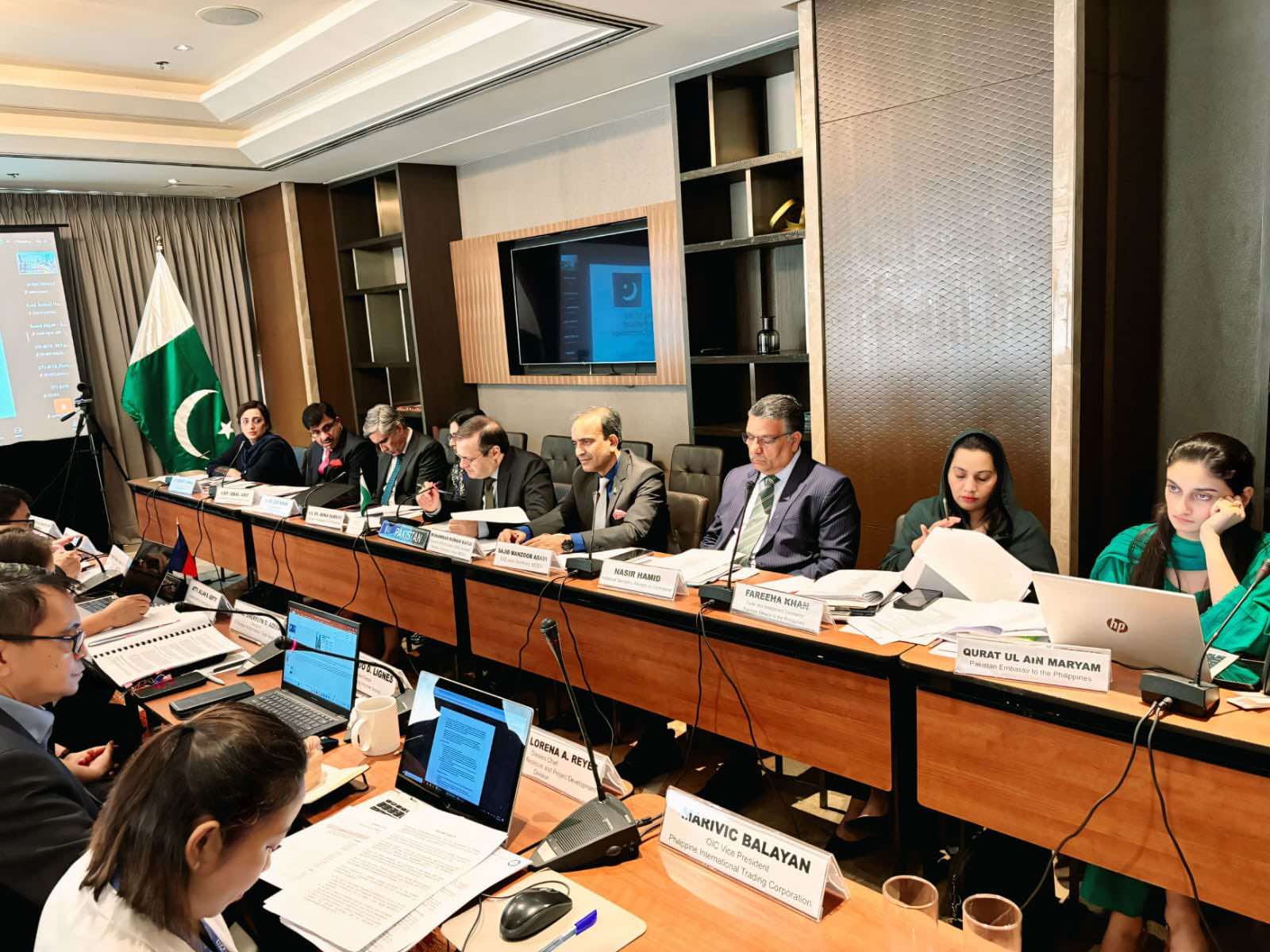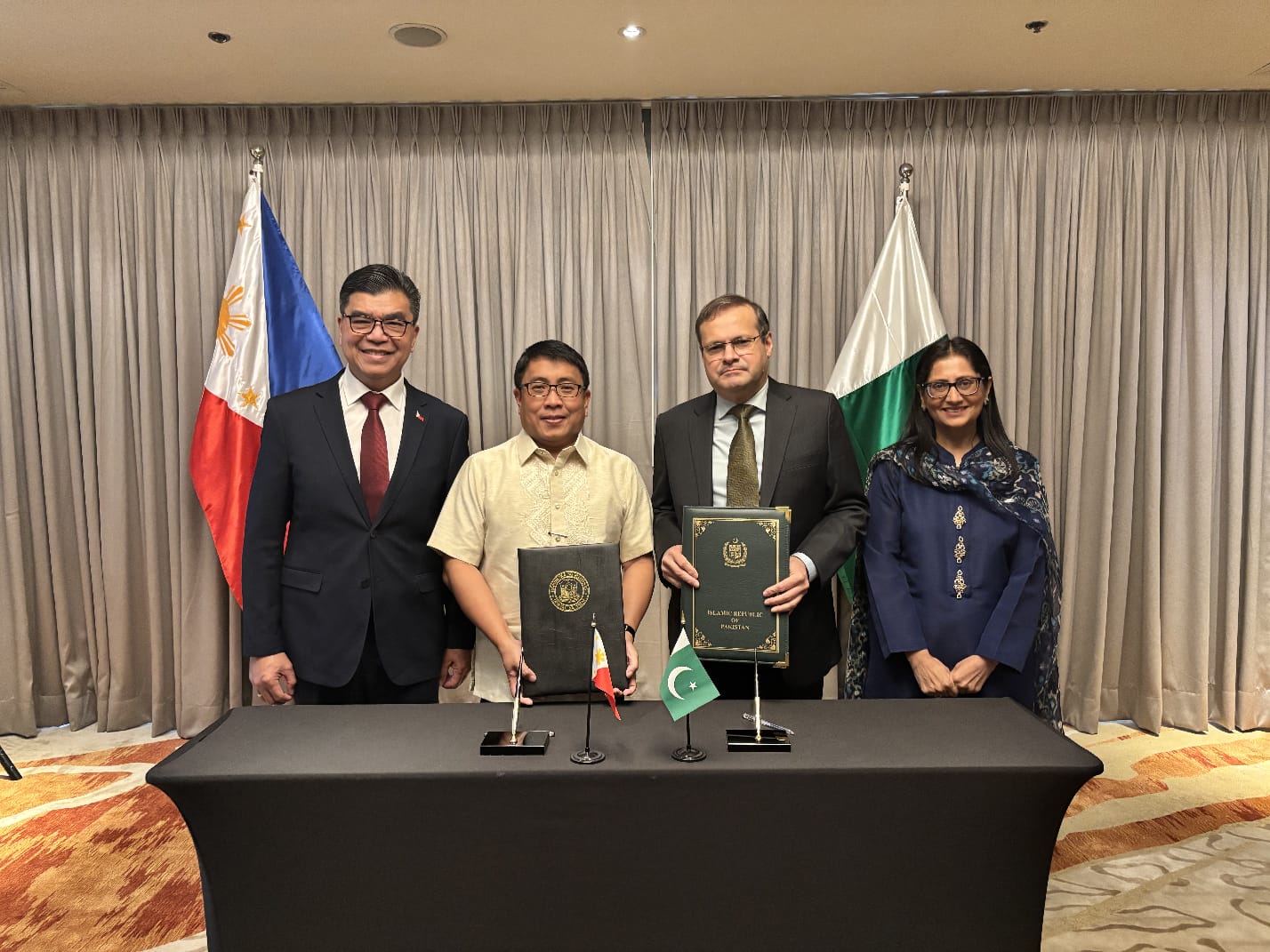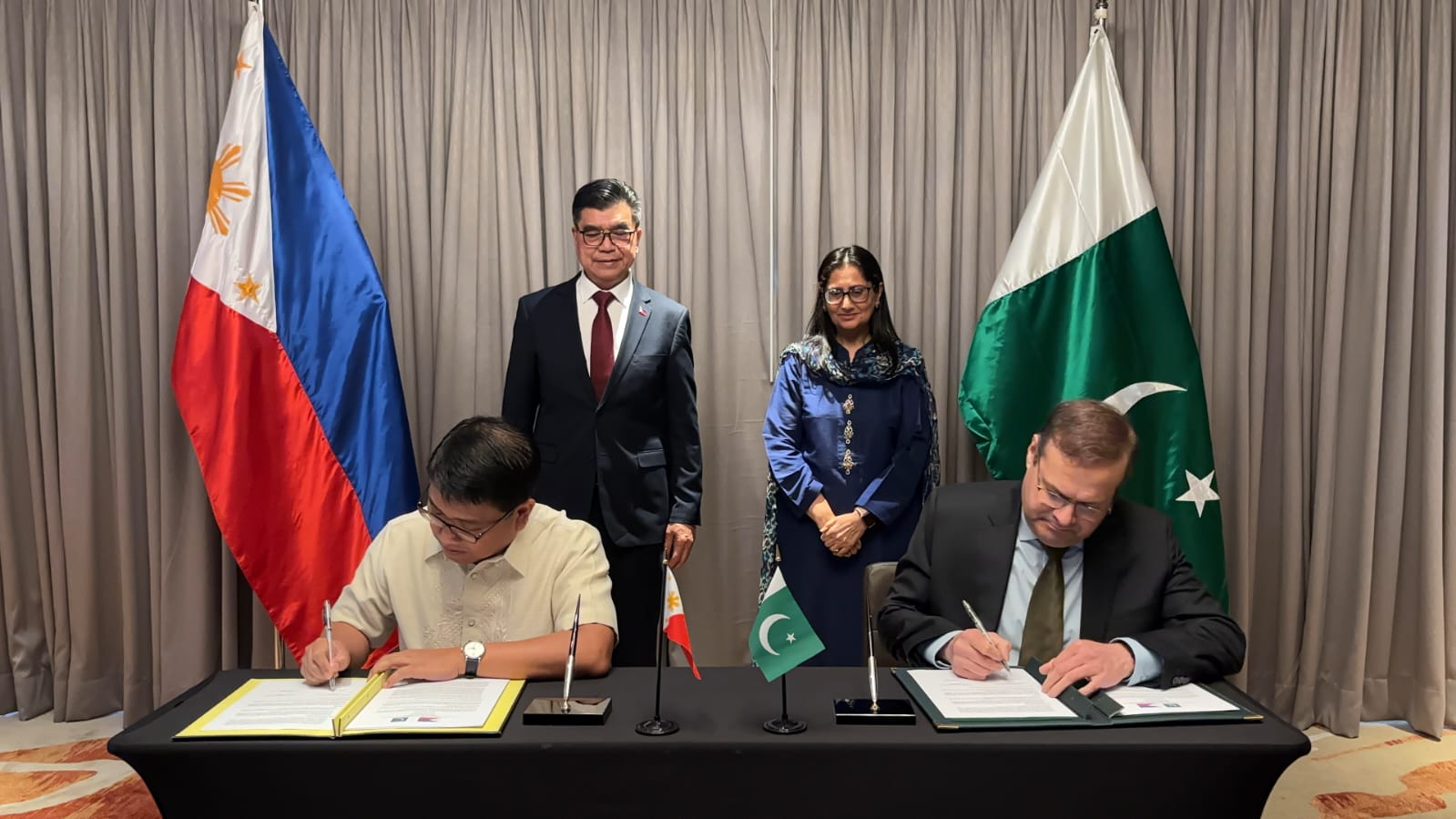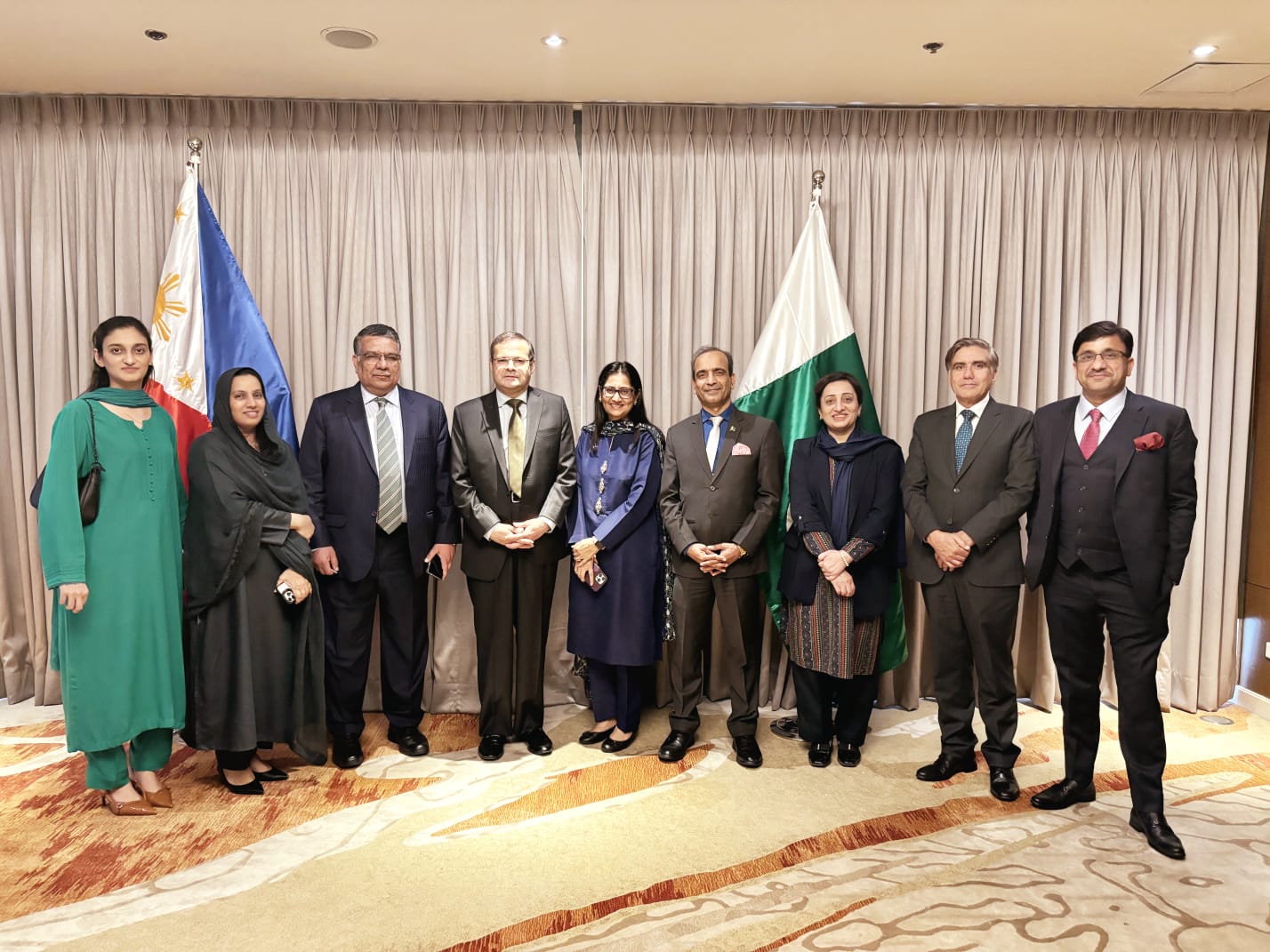

MANILA, 19 February 2026—The Philippines and Pakistan reaffirmed their commitment to expanding bilateral economic relations at the recently concluded Philippines–Pakistan Joint Economic Commission (JEC) Meeting, with H.E. Dr. Emmanuel R. Fernandez, Ambassador of the Republic of the Philippines to Pakistan, actively participating in the discussions and advancing key priorities of Post.
The Philippine delegation was led by DTI Undersecretary Allan B. Gepty. Ambassador Fernandez joined deliberations on trade and investment promotion, cross-border facilitation measures, and business mobility, providing on-the-ground perspectives from Islamabad on market access issues and private-sector engagement.
The Pakistan delegation was headed by Secretary Muhammad Humair Karim of Pakistan’s Ministry of Economic Affairs, with H.E. Dr. Asima Rabbani, Pakistan Ambassador to the Philippines, also in attendance.
Key Outcomes and Priority Areas Advanced During the JEC
Agriculture and Food Security
Both sides agreed to operationalize the 2018 MoU on Agricultural Cooperation through the establishment of a Joint Steering Committee within one month. Discussions included food security, plant variety protection, capacity-building, and disease diagnostics. An updated MoU on mutual trade in agriculture and agricultural inputs will also be pursued to streamline market access for meat, fisheries, fertilizers, and animal feed.
Halal Products and Accreditation
The delegations agreed to strengthen cooperation on halal-certified products and initiate technical-level engagements between halal authorities and accreditation bodies. Ambassador Fernandez underscored the importance of standards alignment and potential mutual recognition to facilitate bilateral halal trade.
Health and Pharmaceuticals
Both sides agreed in principle to form a Joint Working Group on Health covering regulatory cooperation, disease surveillance, and emergency preparedness. Discussions also explored expanding pharmaceutical trade, joint ventures, and cooperation between regulatory authorities.
Irrigation and Water Management
Concrete areas for collaboration were identified, including community-based irrigation systems, groundwater recharge, climate-resilient agriculture, and smallholder irrigation initiatives.
Higher Education and Skills Development
The delegations explored academic exchanges, cooperation on TVET and competency standards, and emerging areas such as digital arts, smart farming, and global labor mobility.
Trade, Investment, and PTA Discussions
Both sides advanced discussions toward a potential Preferential Trade Agreement (PTA), agreeing to undertake national feasibility studies and convene a future virtual meeting of a joint trade working group.
Focus on Business Travel and Visa Facilitation
A significant portion of the discussions addressed the impact of visa policies on trade and investment. Feedback from business stakeholders in Pakistan regarding mobility constraints were highlighted and the need to align visa facilitation with broader economic objectives was underscored. Both sides agreed to continue technical dialogue through appropriate diplomatic and inter-agency channels.
Next Steps
Following the JEC, both sides agreed to:
• Activate the Joint Steering Committee on Agricultural Cooperation within one month;
• Finalize and transmit draft MoUs on agricultural trade and halal cooperation;
• Convene technical-level meetings between regulatory and accreditation authorities;
• Prepare timelines for PTA feasibility studies; and
• Continue dialogue on business mobility and visa facilitation.
Ambassador Fernandez reaffirmed Post’s commitment to sustaining follow-through in Islamabad and coordinating closely with relevant Philippine agencies to ensure that JEC outcomes translate into concrete commercial opportunities.
The successful conclusion of the JEC underscores the shared resolve of the Philippines and Pakistan to deepen economic engagement and deliver tangible benefits for businesses and communities in both countries.